

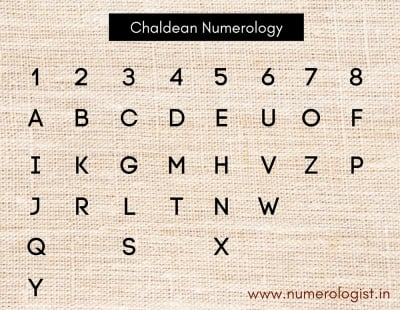
Numerology is the study of the mystical significance of numbers and their influence on human life. Across centuries, practitioners have developed multiple systems, each offering unique philosophies, calculation methods, and applications. Among the most prominent are Chaldean, Kabbalah, and Pythagorean numerology, each guiding individuals toward self-awareness, life purpose, and spiritual growth.
Chaldean Numerology
Overview: Chaldean Numerology is one of the oldest systems, tracing its origins to ancient Babylon. Unlike other methods, it focuses on the vibrational energy of letters rather than their sequential position in the alphabet.
Key Features:
-
Number Assignments: Letters are assigned numbers from 1 to 8 based on sound vibrations, with 9 considered sacred and excluded.
-
Master Numbers: 11, 22, and 33 carry higher energies and greater significance.
-
Hidden Numbers: Names and words contain deeper layers that reveal personality traits and potential challenges.
Applications: Chaldean numerology is widely used for personal insights, name analysis, and compatibility assessments. By understanding the vibrational energy of names, individuals can enhance life decisions, relationships, and business opportunities.
Kabbalah Numerology
Overview: Rooted in Jewish mysticism, Kabbalah numerology emphasizes the spiritual significance of numbers and their connection to divine energies.
Key Features:
-
Alphabet Assignments: Numbers are linked to the Hebrew alphabet, forming a sacred numerical system.
-
Gematria: Words and phrases are analyzed numerically to uncover hidden meanings.
-
Vowel and Consonant Distinction: Differentiating vowels from consonants adds depth to the analysis.
Applications: Kabbalah numerology is often applied in spiritual exploration, sacred text interpretation, and personal development. It fosters a deeper connection with divine energies and expands awareness of life’s hidden dimensions.
Pythagorean Numerology
Overview: Named after the Greek philosopher Pythagoras, this system simplifies numbers to a 1-to-9 scale, focusing on foundational vibrational patterns.
Key Features:
-
Alphabet Assignments: Letters are sequentially numbered from 1 to 9.
-
Life Path Numbers: Derived from birthdates, they reveal life purpose and challenges.
-
Personality & Destiny Numbers: Calculated from names, they provide holistic insights into personal traits and potential paths.
Applications: Pythagorean numerology is widely embraced for self-discovery, career guidance, relationship compatibility, and decision-making. It can also inform business naming, timing of important events, and spiritual growth, offering a practical framework for everyday life.
Comparing the Three Methods
| Aspect | Chaldean | Kabbalah | Pythagorean |
|---|---|---|---|
| Origin | Ancient Babylon | Jewish Mysticism | Ancient Greece |
| Number Assignments | 1-8 with Master Numbers | Hebrew Alphabet | 1-9 sequentially |
| Focus | Vibrational Energies | Sacred & Divine Meaning | Life Purpose & Personality |
| Applications | Personal insights, compatibility, business names | Spiritual insights, sacred texts | Self-discovery, relationships, career, health |
Integrating Numerology with Jyotisha
At Jeevalaya, our research connects numerology with Jyotisha (Vedic astrology) to explore human life purpose. The six Vedangas—Siksha, Chhanda, Vyakarna, Nirukta, Jyotisha, and Kalpa—correspond to sound, rhythm, language, meaning, planetary influence, and ethical conduct. By mapping numerology and Jyotisha, practitioners can uncover interconnected patterns that guide personal development, spiritual growth, and life decisions.
Conclusion
Each numerology system—Chaldean, Kabbalah, and Pythagorean—offers unique insights into personality, destiny, and spiritual potential. By exploring these frameworks and integrating them with Vedic wisdom, individuals can achieve self-awareness, align with their life purpose, and navigate challenges with confidence. Numbers are more than symbols—they are tools for discovery, growth, and transformation.
At Jeevalaya, we continue to research and integrate these methods, highlighting how ancient and modern knowledge converge to illuminate the true purpose of human life.
External link – https://en.wikipedia.org/wiki/Ayurveda
Internal link https://jeevalaya.co.in/ayurvedic-self-care-rituals-for-mental-well-being/