

Understanding the South Indian Astrology Chart
The South Indian Astrology Chart, also called the Janma Kundali or Horoscope, is a graphical representation of planetary positions at the time of birth. Unlike the North Indian grid-style chart, the South Indian chart arranges the twelve zodiac houses in a fixed rectangular format, making it easier to track planets and house rulerships.
This chart is a foundation of Vedic astrology, helping understand personality, relationships, career, health, and spiritual growth.
Structure of the Chart
1. Lagna (Ascendant)
The first house represents the self, physical body, and general approach to life. Identifying the Lagna is the first step in chart interpretation.
2. Houses
The South Indian chart consists of 12 houses, each representing specific life aspects:
- Self, personality
- Wealth, possessions
- Siblings, courage
- Home, mother, emotional well-being
- Children, creativity, education
- Health, service, enemies
- Partnerships, marriage
- Transformation, inheritance, secrets
- Fortune, spirituality, higher education
- Career, reputation
- Friendships, aspirations
- Isolation, subconscious, liberation
3. Planets
Planet placement in houses significantly influences life events:
- Sun: Ego, vitality
- Moon: Emotions, intuition
- Mars: Action, aggression
- Mercury: Communication, intellect
- Jupiter: Luck, growth
- Venus: Love, aesthetics
- Saturn: Discipline, challenges
- Rahu & Ketu: Karma, spiritual lessons
4. Zodiac Signs
Each house contains one of the twelve zodiac signs, coloring the house’s energies:
- Aries – Initiative, courage
- Taurus – Stability, comfort
- Gemini – Communication, adaptability
- Cancer – Nurturing, emotion
- Leo – Leadership, creativity
- Virgo – Analysis, service
- Libra – Harmony, relationships
- Scorpio – Intensity, transformation
- Sagittarius – Wisdom, adventure
- Capricorn – Structure, ambition
- Aquarius – Innovation, humanitarianism
- Pisces – Imagination, spirituality
Reading the South Indian Chart
Step 1: Identify the Ascendant
The Lagna sets the tone for your personality and approach to life.
Step 2: Evaluate Planetary Positions
Check which planets occupy each house and their signs. Assess planetary strength, dignity, and aspects. For example:
- Saturn aspects the 3rd, 7th, and 10th houses
- Mars aspects the 4th, 7th, and 8th houses
- Jupiter aspects the 5th, 7th, and 9th houses
- All planets have a 7th house aspect
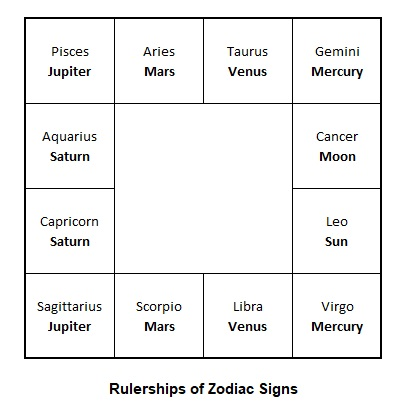
Step 3: Analyze House Rulership
Each zodiac sign has a ruling planet. Its placement provides deeper insight into life themes related to that house.
Step 4: Observe Yogas
Specific planetary combinations, or yogas, indicate strengths, challenges, and major life events.
Step 5: Consider Dasha and Transits
Dasha periods show which planetary energies dominate life phases. Planetary transits reveal ongoing influences and timing for events.
Practical Tips
- Take Your Time: Reading a Vedic chart is complex; patience is key.
- Cross-Reference: Consider both house placement and zodiac signs.
- Consult Resources: Use authoritative texts on Vedic astrology for deeper understanding.
- Remedial Measures: If challenges appear, remedies such as mantras, rituals, gemstone therapy, and sound healing can help align energies.
Conclusion
Learning to read a South Indian astrology chart opens the door to understanding personality, life patterns, and potential growth opportunities. From assessing houses and planetary positions to interpreting yogas and Dasha periods, this process provides a holistic view of life. When approached carefully, it not only guides personal decisions but also aligns the individual with spiritual and cosmic harmony, reflecting the wisdom of Vedic astrology and Ayurveda.The South Indian Astrology Chart, also known as the Janma Kundali, is a detailed Vedic astrology tool that maps the positions of planets at the exact time of a person’s birth. Unlike the North Indian grid-style chart, the South Indian chart uses a rectangular layout of the twelve zodiac houses, making it easier to visualize planetary placements and house rulerships. Each house represents specific life aspects, from personality and wealth to relationships, career, health, and spirituality, while the placement of planets and their aspects provide insights into how these areas unfold over time.
Key components include the Lagna (Ascendant), which determines the individual’s core personality and approach to life, the 12 houses representing different life domains, and the planets, each symbolizing distinct energies such as vitality (Sun), emotions (Moon), intellect (Mercury), and spiritual growth (Rahu and Ketu). The zodiac signs within each house further influence the outcomes of these life areas.
Reading a South Indian chart involves analyzing planetary positions, aspects, yogas (planetary combinations), house rulerships, and Dasha periods (planetary cycles) to gain a comprehensive understanding of an individual’s life journey. Observing transits helps interpret current influences and future possibilities.
By mastering this method, one can gain insights into career, relationships, health, spiritual growth, and challenges, while also exploring remedial measures such as mantras, rituals, sound healing, or gemstone therapy. Understanding the South Indian astrology chart provides a holistic view of life, bridging Vedic wisdom with practical guidance for personal growth and cosmic alignment.jeevalaya #nakshatras #jeevalaya bangalore #jeevalaya retreat centre #jeevalaya whitefield #mental wellness #property healing #Ayurveda #Counseling #Medical astrology
External link – https://en.wikipedia.org/wiki/Ayurveda
Internal link – https://jeevalaya.co.in/ayurvedic-self-care-rituals-for-mental-well-being/