
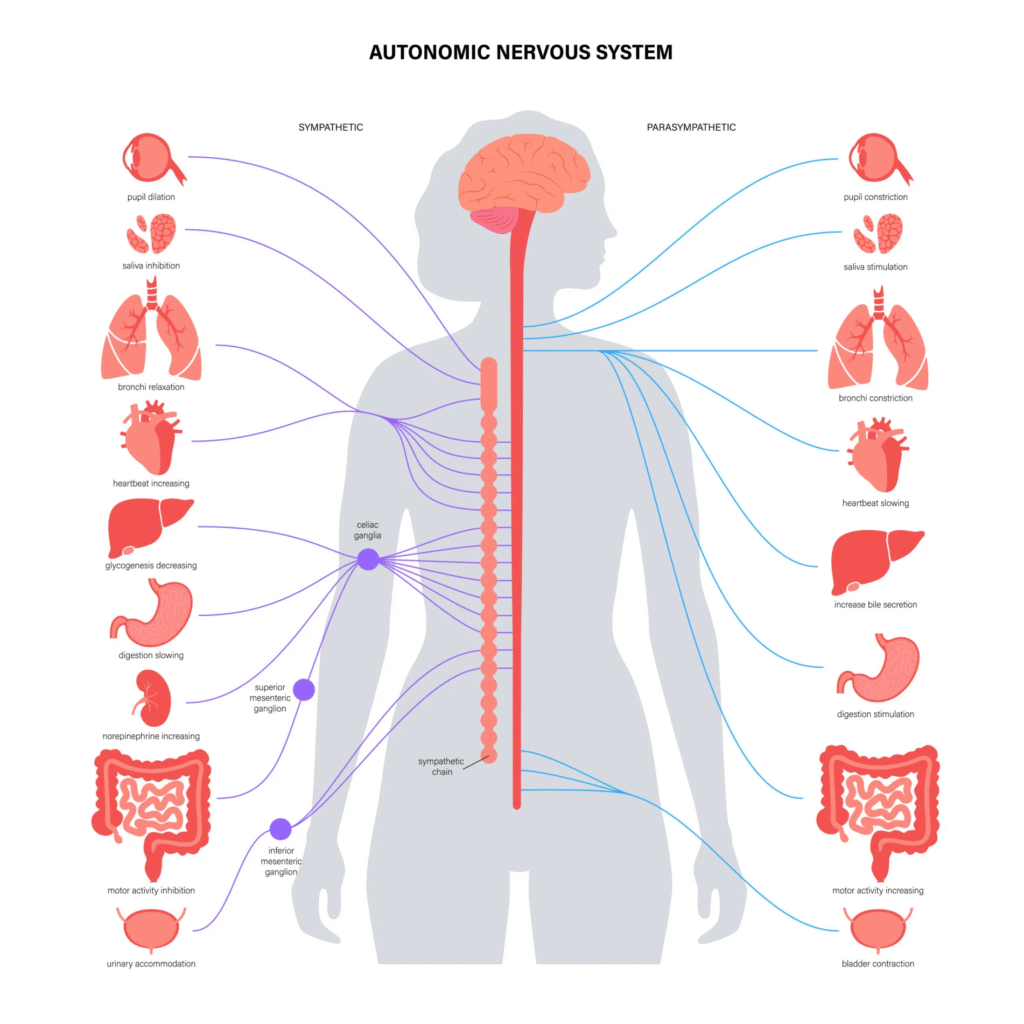
Autonomic Nervous System (ANS) is one of the most vital yet silent regulators of human health. It governs automatic bodily functions such as breathing, heart rate, blood pressure, digestion, hormone regulation, and temperature control—all without conscious effort. When this finely tuned system functions optimally, the body experiences balance and resilience. However, when disrupted, it can lead to a condition known as Autonomic Nervous System Dysfunction.
ANS dysfunction occurs when communication between the brain and the body’s automatic processes becomes imbalanced. This imbalance often manifests as chronic fatigue, digestive disturbances, cardiovascular irregularities, and heightened stress responses, significantly impacting quality of life.
Causes of Autonomic Nervous System Dysfunction
Several internal and external factors can disturb the harmony of the autonomic nervous system:
Chronic Stress
Persistent emotional or mental stress keeps the nervous system in a prolonged “fight or flight” state. Over time, this constant activation exhausts the ANS, leading to burnout, hormonal imbalance, and weakened immunity.
Infections
Certain viral and bacterial infections can directly affect nerve signaling, leaving the autonomic system dysregulated long after the infection has resolved.
Physical or Emotional Trauma
Trauma—whether physical injury or emotional shock—can leave deep imprints on the nervous system, disrupting autonomic regulation and energy flow.
Genetic Predisposition
In some individuals, genetic factors influence nervous system sensitivity, making them more vulnerable to autonomic imbalance.
Common Symptoms of ANS Dysfunction
Autonomic Nervous System Dysfunction presents with diverse and often confusing symptoms, including:
- Persistent fatigue, even after adequate rest
- Lightheadedness or dizziness, especially on standing
- Digestive disturbances such as bloating, constipation, or irregular appetite
- Heart rate fluctuations, palpitations, or irregular rhythms
- Temperature intolerance, sweating abnormalities, or cold sensitivity
These symptoms often overlap with other conditions, making holistic evaluation essential.
Ayurveda and Alternative Medicine for ANS Healing
Ayurveda views ANS dysfunction as an imbalance of Vata dosha, often accompanied by Pitta or Kapha disturbances. Healing focuses on restoring harmony between body, mind, and life force.
Herbal Support
Adaptogenic herbs like Ashwagandha, Brahmi, and Jatamansi calm the nervous system, reduce stress hormones, and strengthen resilience.
Panchakarma Detox
Panchakarma therapies cleanse deep-seated toxins (Ama), rejuvenate nerve tissues, and reset the autonomic balance at a cellular level.
Sound Healing Therapy
Specific sound frequencies and vibrations resonate with energy centers (chakras), helping regulate the nervous system and restore coherence between brain and body.
Yoga and Pranayama
Gentle yoga postures combined with slow, rhythmic breathing techniques activate the parasympathetic nervous system, promoting relaxation and healing.
Meditation and Mindfulness
Regular meditation reduces nervous system hyperactivity, improves emotional regulation, and enhances mind-body awareness.
Jeevalaya’s Advanced Approach to ANS Dysfunction
At Jeevalaya, treatment modification for Autonomic Nervous System Dysfunction goes deeper by identifying meridian channels and chakra imbalances showing low or excessive energy.
Meridian Yin–Yang Pairs Assessed
- Lung & Large Intestine
- Spleen & Stomach
- Heart & Small Intestine
- Kidney & Bladder
- Pericardium & Triple Warmer
- Liver & Gall Bladder
Energy levels are evaluated using Naadi Pariksha, chakra analysis, and mathematical verification of energetic imbalances. Special attention is given to Liver and Lung Yin channels, which are often central in ANS disorders.
Customized Healing Protocols
Based on the current dosha state, medications and therapies focus on:
- Balancing doshas
- Activating life force (Prana)
- Restoring transparency and flow in meridian channels
Ongoing Research at Jeevalaya
Jeevalaya’s research team is actively developing ANS-friendly treatment protocols, especially for individuals sensitive to traditional formulations. Classical Ayurvedic Arishtas often contain 30–55% sugar, which may not be suitable for many ANS-affected individuals. Safer, more adaptable alternatives are being explored to revive autonomic balance without aggravation.
Conclusion
Autonomic Nervous System Dysfunction is not merely a physical disorder—it is a disruption of the body’s inner intelligence. Through Ayurveda, sound healing, meridian therapy, and mindful practices, Jeevalaya offers a deeply integrative and compassionate path to recovery. Healing begins with understanding, and balance is restored when science and consciousness move together.
External link – https://en.wikipedia.org/wiki/Ayurveda
Internal link – https://jeevalaya.co.in/ayurvedic-self-care-rituals-for-mental-well-being/