

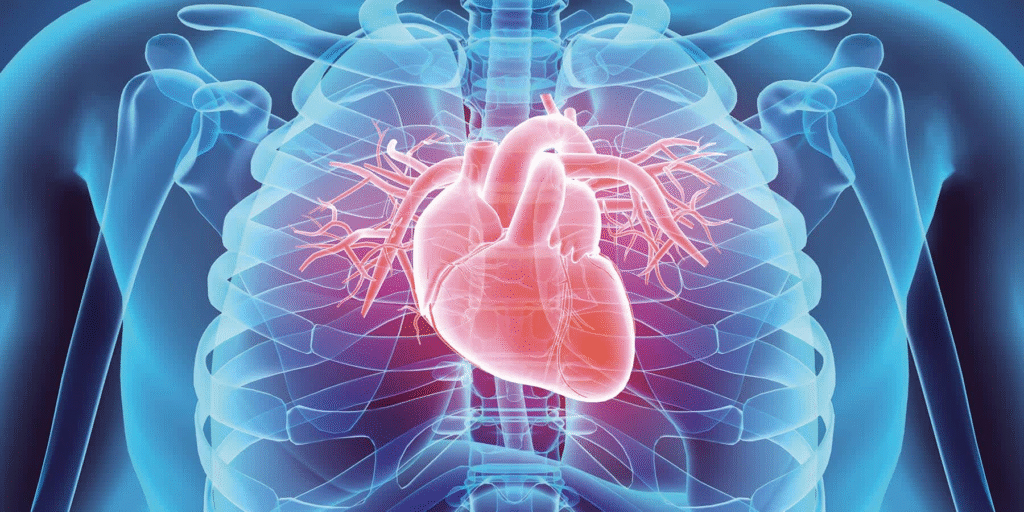
Integrative Healing for Post-Infarction Angina: Jeevalaya’s Research-Backed Approach
Post-infarction angina pectoris remains a challenging condition for many patients recovering after a heart attack. Despite advances in modern cardiology, a significant number of individuals continue to experience chest pain, oxidative stress, immune imbalance, and dependence on long-term pain medication—even after angioplasty, stenting, or bypass surgery.
The Jeevalaya Ayurveda Research Team has been exploring a non-invasive, integrative therapeutic approach that combines transdermal neurostimulation, Ayurvedic compounded therapy, and light-based energy healing to support recovery in post-infarction angina pectoris.
Activating the Body’s Sanogenesis Mechanisms
At the core of Jeevalaya’s protocol is the activation of sanogenesis—the body’s innate self-regulatory and self-healing mechanisms. Sanogenesis involves the coordinated functioning of the nervous, hormonal, immune, and metabolic systems, enabling the body to adapt to stress and restore balance.
Clinical observations indicate that transdermal neurostimulation therapy, when combined with Ayurveda, helps reduce extreme oxidative stress, a major contributor to tissue damage and persistent angina following myocardial infarction. Lower oxidative stress supports cellular recovery and improves physiological resilience.
Reduction in Pain Episodes and Medication Dependency
One of the most significant outcomes documented by Team Jeevalaya is a measurable decrease in angina pain episodes. Patients undergoing neurostimulation combined with Ayurvedic compounded therapy showed:
- Reduced frequency and intensity of chest pain
- Decreased dependence on allopathic pain medications
- In certain cases, complete absence of angina attacks by the end of therapy
These improvements suggest enhanced cardiac adaptation and better pain regulation without aggressive invasive procedures.
Impact on Oxidative Stress and Immune Complexes
The protocol further integrates Hyper Active Light therapy, focused on the Heart Chakra, and in selected cases, the Throat Chakra. When combined with neurostimulation and Ayurvedic therapy, this approach demonstrated:
- Regression in active oxygen forms after non-Q myocardial infarction
- Reduction in oxidative stress markers after Q-wave myocardial infarction
- Decrease in circulating immune complexes, indicating immune modulation
These changes were validated using EPAP analysis, supporting the therapy’s effect on post-infarction biochemical imbalance.
Improved Cell Membrane Health
Another notable observation is the increase in membrane fluidity and improved structural characteristics of cell membranes. Ayurveda-based compounded therapies prescribed in this protocol focus on nourishing and rebuilding cellular membranes—an essential factor in restoring cardiovascular tissue integrity and metabolic efficiency.
A Promising Direction for Early Post-Infarction Angina
The Jeevalaya research suggests that controlled activation of oxidative pathways, alongside enhanced anti-radical protection and membrane-supportive Ayurvedic formulations, may offer a promising complementary strategy for early post-infarction angina pectoris management.
Documented Clinical Evidence
All cases treated at Jeevalaya are thoroughly documented with:
- Pre- and post-therapy GDV analysis
- Objective imaging such as CT Cardio and Doppler studies
- Patient-reported symptom relief and pain reduction
Notably, two recent cases of post-infarction angina pectoris showed normalization validated by Doppler imaging, and two cases of deep vein thrombosis (DVT) demonstrated obstruction resolution following therapy.
Who This Approach Is For
This integrative therapy is designed for individuals seeking options beyond angioplasty, stents, or bypass surgery, particularly those looking for supportive, non-invasive, research-oriented care alongside conventional management.jeevalaya #nakshatras #jeevalaya bangalore #jeevalaya retreat centre #jeevalaya whitefield #mental wellness #property healing #Ayurveda #Counseling #Medical astrology
External link – https://en.wikipedia.org/wiki/Ayurveda
Internal link – https://jeevalaya.co.in/ayurvedic-self-care-rituals-for-mental-well-being/