

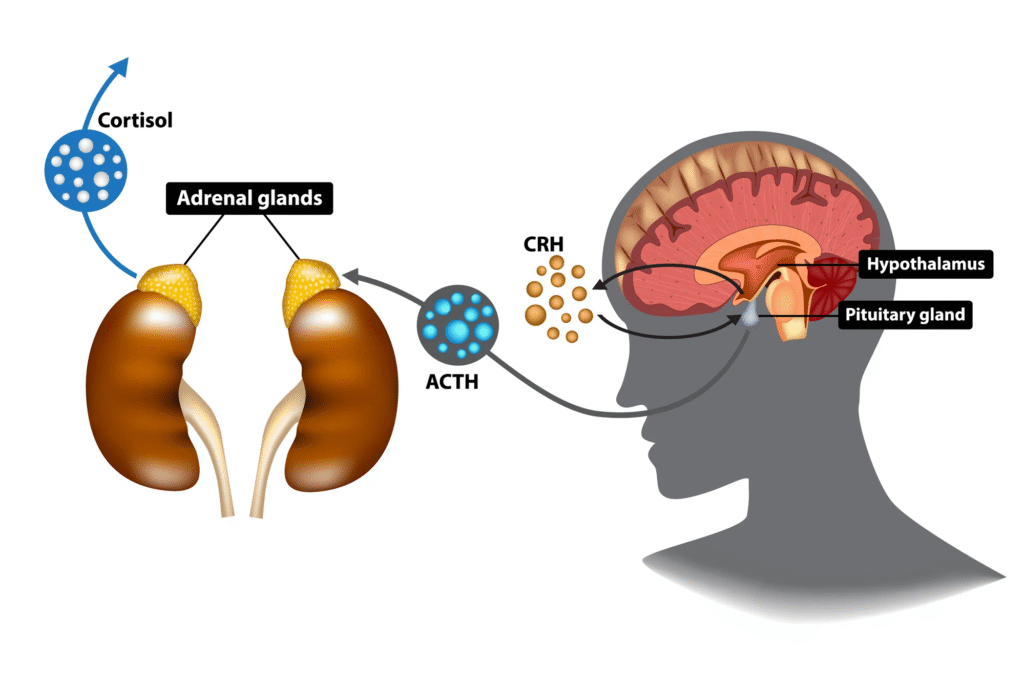
Starting January 2025, Team Jeevalaya has been documenting clinical observations highlighting hidden or embedded issues in patients, linking modern physiological functions to insights from Ayurveda and Vedic sciences. Central to these findings is the hypothalamic-pituitary-adrenal (HPA) axis, which plays a critical role in stress response, hormonal balance, and overall wellness.
Key Players in the Axis of Discovery
The adrenal glands, perched atop each kidney, are vital regulators of stress and metabolism. Each adrenal gland comprises two parts: the cortex and the medulla.
Adrenal Cortex produces:
- Glucocorticoids (Cortisol): Regulates carbohydrate metabolism and stress response. Chronic elevation can lead to weight gain, high blood pressure, and weakened immunity.
- Mineralocorticoids (Aldosterone): Manages sodium and potassium balance, helping regulate blood pressure and fluid homeostasis.
- Androgens: Contribute to libido and sexual function in both males and females.
- By studying the axis of pituitary, adrenal, and hypothalamus, Jeevalaya continues to explore how hidden physiological disruptions contribute to modern health issues and how Ayurvedic principles can guide effective interventions for a balanced, resilient, and healthy life……
Adrenal Medulla releases catecholamines like adrenaline and norepinephrine, controlled by the autonomic nervous system (ANS). These hormones prepare the body for “fight or flight,” increasing heart rate, blood pressure, and energy availability.
The urogenital system and kidneys are intricately connected to adrenal health. The kidneys filter blood, maintain electrolyte balance, and produce enzymes like renin for blood pressure regulation. The urogenital system influences reproductive function and overall hormonal balance. Chronic stress and HPA axis imbalance can disrupt these systems, affecting fertility, libido, and metabolic health.
Understanding the HPA axis from both modern medicine and Ayurveda highlights the critical role of stress management, hormonal balance, and holistic practices. Integrating counseling, sound healing, and lifestyle interventions can harmonize adrenal, pituitary, and hypothalamic functions, promoting overall well-being.
The Pituitary Gland: Master Controller
The pituitary gland, often called the “master gland,” orchestrates adrenal and urogenital functions. By releasing ACTH, the pituitary signals adrenal glands to produce cortisol, helping the body manage stress. Hormones like LH and FSH influence the urogenital system, regulating reproductive health.
In essence, the pituitary gland and its sidekick, the autonomic nervous system, act as central controllers, maintaining homeostasis by regulating the adrenal glands, urogenital system, and kidneys. Disruption of this axis due to chronic stress allows negative factors to infiltrate the system, potentially damaging the pineal gland, hypothalamus, and thalamus.
Interconnections and Holistic Insights
Modern observations reveal that the HPA axis does not always follow textbook patterns. Stress, lifestyle factors, and environmental influences create cascading effects throughout the body:
- Elevated cortisol disrupts adrenal and kidney function.
- Hormonal imbalance affects reproductive health and sexual function.
- Chronic stress impacts the pineal gland, hypothalamus, and associated neural pathways, affecting sleep, cognition, and emotional balance.
According to Vedic science, specific planetary correlations provide a metaphoric map of bodily functions: the Sun aligns with the thalamus, the Moon with the hypothalamus, Mars with the amygdala, Mercury with the subthalamus, and so on. These insights complement modern understanding by illustrating how stressors (shadow factors) cascade through the body, impacting the HPA axis, adrenal glands, and urogenital system.
The Takeaway
Understanding the HPA axis from both modern medicine and Ayurveda highlights the critical role of stress management, hormonal balance, and holistic practices. Integrating counseling, sound healing, and lifestyle interventions can harmonize adrenal, pituitary, and hypothalamic functions, promoting overall well-being.
By studying the axis of pituitary, adrenal, and hypothalamus, Jeevalaya continues to explore how hidden physiological disruptions contribute to modern health issues and how Ayurvedic principles can guide effective interventions for a balanced, resilient, and healthy life.
External link – https://en.wikipedia.org/wiki/Ayurveda
Internal link – https://jeevalaya.co.in/ayurvedic-self-care-rituals-for-mental-well-being/