

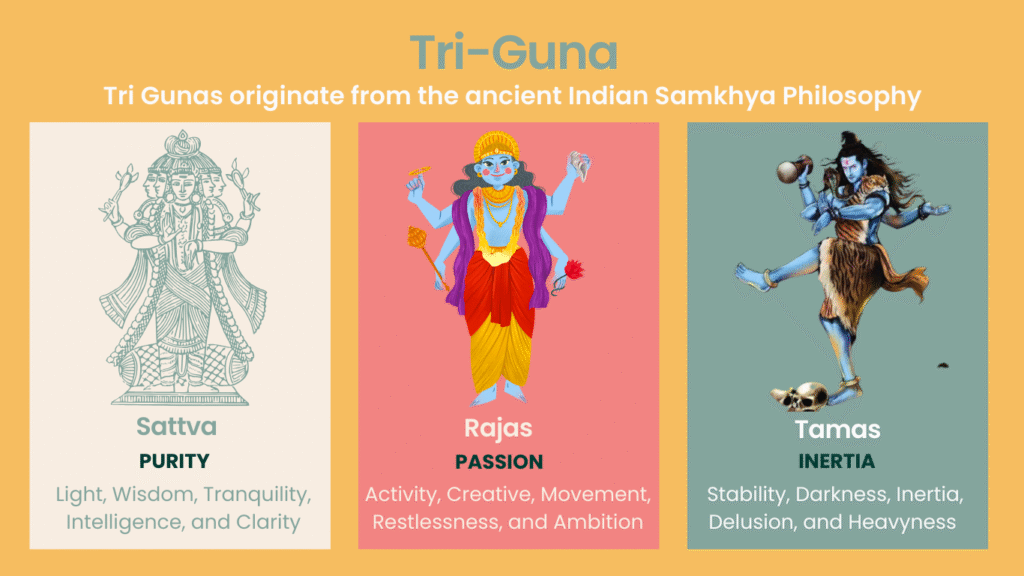
Understanding the Three Gunas in Ayurveda and the Bhagavad Gita
The three gunas—Sattva, Rajas, and Tamas—are fundamental qualities discussed in the Bhagavad Gita, and they also hold a significant place in Ayurveda. Each guna represents a distinct energy that shapes our behavior, mental state, and overall well-being. Understanding the gunas helps individuals cultivate balance, make better lifestyle choices, and achieve harmony of body, mind, and spirit.
Sattva: The Quality of Purity and Harmony
Description:
Sattva is the essence of purity, knowledge, and clarity. It symbolizes light and balance, fostering wisdom, compassion, and selflessness.
Ayurvedic Perspective:
In Ayurveda, Sattva corresponds to a balanced and clear mind, promoting calmness, joy, and emotional stability. Physically, consuming Sattvic foods—such as fresh fruits, vegetables, whole grains, and lightly cooked meals—enhances vitality and supports natural healing.
Lifestyle Practices to Cultivate Sattva:
- Meditation and mindfulness practices
- Gentle yoga and breathing exercises
- Consuming fresh, wholesome, and nourishing foods
- Engaging in compassionate and selfless actions
A Sattvic lifestyle nurtures both spiritual growth and physical health, allowing the mind and body to function in harmony.
Rajas: The Energy of Activity and Passion
Description:
Rajas embodies energy, activity, and desire. It drives action, ambition, and creativity but can cause restlessness and overattachment when excessive.
Ayurvedic Perspective:
Rajas manifests as mental and physical dynamism. Rajasik foods—spicy meals, caffeinated drinks, and processed sugars—stimulate the senses and increase energy. However, an excess of Rajas can lead to stress, anxiety, irritability, and burnout.
Balancing Rajas:
- Incorporate calming practices like mindfulness and meditation
- Choose moderate, balanced foods over overly stimulating options
- Maintain regular daily routines to stabilize energy
- Practice grounding activities such as nature walks or slow breathing
By moderating Rajas, individuals can maintain focus, creativity, and emotional equilibrium.
Tamas: The Energy of Inertia and Darkness
Description:
Tamas represents inertia, ignorance, and resistance to change. While it supports rest and recovery, excess Tamas leads to stagnation, lethargy, and mental dullness.
Ayurvedic Perspective:
Tamasic tendencies result in mental dullness, poor motivation, and emotional instability. Tamasic foods—stale, overly processed, or fermented—contribute to physical and mental sluggishness.
Reducing Tamas:
- Consume fresh, energizing foods like fruits, sprouts, and light meals
- Engage in physical exercise and stimulating activities
- Avoid excessive sleep and sedentary habits
- Practice activities that awaken creativity and mental alertness
Balancing Tamas ensures a vibrant mind, efficient digestion, and active engagement with life.
Conclusion
The three gunas—Sattva, Rajas, and Tamas—play a pivotal role in both the Bhagavad Gita and Ayurveda, influencing our physical health, mental clarity, and spiritual growth. By cultivating Sattva, moderating Rajas, and minimizing Tamas, individuals can achieve holistic mind-body balance. Understanding your unique tendencies and aligning lifestyle choices with these natural qualities promotes well-being, harmony, and inner peace, enabling a fulfilling and purposeful life.The three gunas—Sattva, Rajas, and Tamas—are fundamental qualities described in the Bhagavad Gita and referenced in Ayurveda, shaping physical, mental, and spiritual health. Sattva represents purity, harmony, and clarity, promoting wisdom, calmness, and emotional balance. Rajas embodies activity, passion, and energy, driving ambition and creativity but leading to restlessness or stress if excessive. Tamas signifies inertia and darkness, supporting rest but causing lethargy, mental dullness, and stagnation when dominant. Understanding the interplay of these gunas and adopting Sattvic foods, balanced routines, mindfulness, and physical activity helps cultivate harmony, reduce stress, enhance vitality, and promote holistic well-being. By fostering Sattva, moderating Rajas, and minimizing Tamas, individuals can achieve balance of body, mind, and spirit for a healthier, more fulfilling life.jeevalaya #nakshatras #jeevalaya bangalore #jeevalaya retreat centre #jeevalaya whitefield #mental wellness #property healing #Ayurveda #Counseling #Medical astrology
External link – https://en.wikipedia.org/wiki/Ayurveda
Internal link – https://jeevalaya.co.in/ayurvedic-self-care-rituals-for-mental-well-being/