

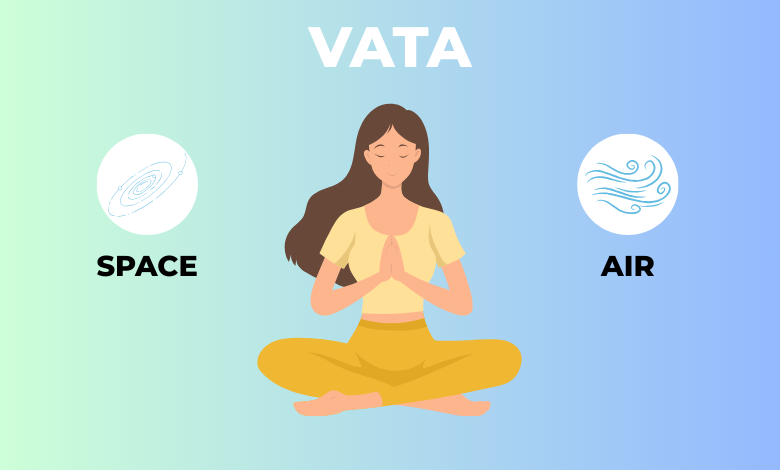
In Ayurveda, health is governed by the balance of three fundamental energies known as doshas—Vata, Pitta, and Kapha. Among them, Vata dosha is considered the most powerful because it governs all movement in the body and mind. Composed of the elements air (Vayu) and ether (Akasha), Vata represents motion, communication, creativity, and vitality.
When Vata is balanced, it supports lightness, enthusiasm, flexibility, and clear thinking. However, when imbalanced, it becomes the root cause of many physical and psychological issues, including anxiety, restlessness, digestive disturbances, insomnia, dryness, and nervous system disorders. Understanding Vata and its subtypes is essential for achieving long-term health and inner harmony.
The Role of Vata Dosha in the Body
Vata governs all forms of movement—breathing, blood circulation, nerve impulses, elimination, and even thought processes. It is responsible for initiating and coordinating the functions of the other two doshas. Because of its mobile and subtle nature, Vata is highly sensitive to stress, irregular routines, travel, poor diet, and lack of grounding.
Ayurveda further explains Vata through five subtypes, each responsible for specific physiological and psychological functions.
The Five Subtypes of Vata Dosha
1. Prana Vata – The Controller of Life Force
Prana Vata resides in the head, brain, chest, and respiratory system. It governs inhalation, sensory perception, and mental awareness. Prana Vata also controls how we receive and process experiences, thoughts, and emotions.
When balanced, Prana Vata enhances mental clarity, emotional stability, focus, and calmness. Imbalance can lead to anxiety, fear, racing thoughts, shallow breathing, and nervous system disorders.
2. Udana Vata – The Energy of Expression and Growth
Udana Vata is responsible for upward movement and is associated with speech, communication, memory, confidence, and personal growth. It influences the throat, lungs, and vocal cords.
A balanced Udana Vata supports clear expression, motivation, and self-confidence. When disturbed, it may result in speech difficulties, low confidence, arrogance, or excessive ambition.
3. Samana Vata – The Fire of Digestion
Located in the digestive tract, Samana Vata regulates digestion, metabolism, and nutrient absorption. It works closely with digestive fire (Agni) to assimilate food and energy.
Balanced Samana Vata ensures healthy digestion, stable energy levels, and proper nourishment. An imbalance can cause bloating, indigestion, gas, poor appetite, or irregular metabolism.
4. Apana Vata – The Energy of Elimination
Apana Vata governs downward movement and elimination processes such as bowel movements, urination, menstruation, and childbirth. It resides in the lower abdomen and pelvic region.
When Apana Vata is balanced, it supports detoxification and reproductive health. Imbalance may lead to constipation, urinary issues, anxiety, lower back pain, or reproductive disorders.
5. Vyana Vata – The Force of Circulation
Vyana Vata controls circulation, muscle movement, and the distribution of nutrients throughout the body. It ensures coordination between the heart, muscles, and nervous system.
Balanced Vyana Vata supports stamina, strength, coordination, and vitality. When imbalanced, it can cause fatigue, poor circulation, muscle weakness, or irregular heartbeat.
Significance of Balancing Vata for Healthy Living
Maintaining balanced Vata is essential for physical health, emotional resilience, and mental clarity. Since Vata is easily aggravated, Ayurveda emphasizes grounding and nourishing practices such as:
- Warm, cooked, and nourishing foods
- Regular daily routines
- Adequate rest and sleep
- Gentle yoga, pranayama, and meditation
- Oil massages (Abhyanga) and calming therapies
When Vata and its subtypes function harmoniously, the body experiences stability, creativity, clarity, and sustained energy.
Conclusion
Understanding Vata dosha and its five subtypes provides deep insight into how the body and mind function. By aligning lifestyle choices with Ayurvedic principles, Vata can be kept in balance—preventing disease and promoting a vibrant, grounded, and fulfilling life.
In Ayurveda, balancing Vata is not just about health—it is the foundation for peace, awareness, and conscious living.
#jeevalaya #nakshatras #jeevalaya bangalore #jeevalaya retreat centre #jeevalaya whitefield #mental wellness #property healing #Ayurveda #Counseling #Medical astrology
External link – https://en.wikipedia.org/wiki/Ayurveda
Internal link – https://jeevalaya.co.in/ayurvedic-self-care-rituals-for-mental-well-being/